The Hamar people of Ethiopia’s Omo Valley have long practiced a rite of passage that is as breathtaking as it is brutal. The bull-jumping ceremony, a cornerstone of Hamar culture, marks the transition of young boys into manhood. Unlike Western coming-of-age rituals, this tradition is visceral, demanding both physical prowess and mental fortitude. The ceremony is not merely a test but a communal event that binds the tribe together, weaving a tapestry of sacrifice, endurance, and celebration.
At the heart of the ritual lies the act of bull jumping itself. The initiate, typically a teenager, must run across the backs of a line of bulls arranged side by side. This is no simple feat—the animals are untethered, their hides slick with dung and urine, making each step precarious. A single misstep could result in serious injury, yet the boy is expected to complete the task naked, symbolizing his raw vulnerability and the purity of his transition. The community gathers to witness this moment, their presence a reminder that adulthood is earned, not given.
But the ceremony begins long before the first leap. In the days leading up to the event, female relatives of the initiate—mothers, sisters, and cousins—subject themselves to a ritual flogging. They present their backs to male members of the tribe, who strike them with thin, flexible sticks. The women endure the pain without flinching, their wounds a testament to their love and dedication. This act, though shocking to outsiders, is deeply symbolic. The scars they bear are badges of honor, proof of their willingness to suffer for the success of their male relative.
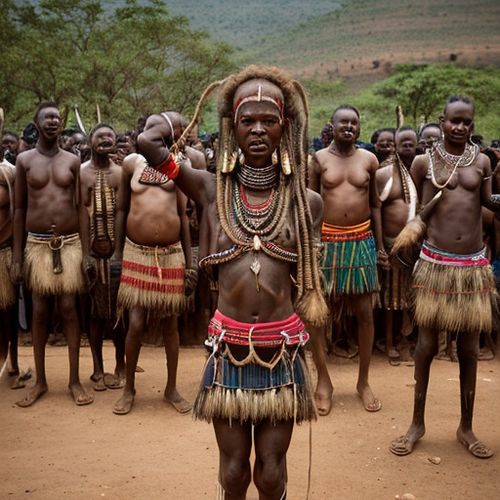
The bull-jumping ceremony is also a spectacle of adornment and music. The women dress in elaborate beaded skirts and ochre-covered hair, their bodies glistening with butter and oil. They dance and sing, their voices rising in a hypnotic chant that drives the rhythm of the event. The men, meanwhile, blow horns and beat drums, the cacophony creating an almost trance-like atmosphere. Every element of the ritual is designed to elevate the initiate, to surround him with the strength and spirit of his people.
For the Hamar, the ceremony is more than a test of bravery—it is a reaffirmation of identity. In a world where modernity encroaches on tradition, the bull jump stands as a defiant celebration of cultural heritage. Those who succeed gain the right to marry, own cattle, and participate in tribal decisions. Failure, though rare, carries a heavy stigma; the boy must wait another year to attempt the jump again, his delayed manhood a mark of shame.
Yet the ritual is not without controversy. Human rights organizations have criticized the flogging of women, calling it a form of abuse. The Hamar, however, view it as an integral part of their social fabric, a voluntary act of solidarity. The women themselves often speak proudly of their scars, seeing them as symbols of their role in upholding tradition. This clash of perspectives highlights the broader tension between cultural preservation and global human rights standards.
As the sun sets over the Omo Valley, the air thick with dust and the scent of sweat, the bull-jumping ceremony reaches its climax. The initiate, having successfully crossed the backs of the bulls, is lifted onto the shoulders of the elders. The crowd erupts in cheers, their voices echoing across the savanna. In that moment, the boy is no more—he has become a man, his place in the tribe secured. The ceremony, with all its pain and pageantry, is a reminder that some traditions refuse to fade, standing as vivid testaments to the resilience of the human spirit.

By Grace Cox/Apr 19, 2025
By Sarah Davis/Apr 19, 2025

By Noah Bell/Apr 19, 2025

By Victoria Gonzalez/Apr 19, 2025

By Daniel Scott/Apr 19, 2025

By Elizabeth Taylor/Apr 19, 2025
By David Anderson/Apr 19, 2025
By Benjamin Evans/Apr 19, 2025
By John Smith/Apr 19, 2025
By Christopher Harris/Apr 19, 2025

By James Moore/Apr 19, 2025
By Amanda Phillips/Apr 19, 2025
By Thomas Roberts/Apr 19, 2025
By Amanda Phillips/Apr 19, 2025
By Elizabeth Taylor/Apr 19, 2025

By David Anderson/Apr 19, 2025
By Daniel Scott/Apr 19, 2025
By James Moore/Apr 19, 2025
By Daniel Scott/Apr 19, 2025

By Olivia Reed/Apr 19, 2025