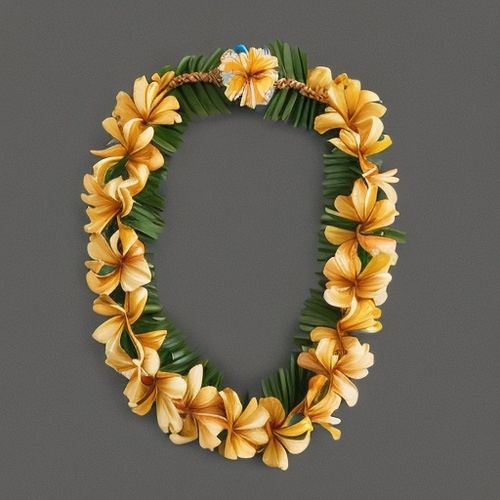
The Hawaiian lei, a symbol of aloha, carries profound cultural significance that transcends its simple appearance as a floral garland. Worn around the neck or presented as a gesture of welcome, love, or respect, the lei is deeply embedded in the traditions and daily life of Hawaii. Its origins trace back to the early Polynesian settlers who brought with them the custom of adorning themselves with natural elements from their surroundings. Over centuries, the lei evolved into a cherished emblem of Hawaiian identity, embodying the spirit of the islands and their people.
Each element of the lei—its flowers, leaves, shells, or even feathers—holds meaning. The most common leis are made from plumeria, orchids, or maile leaves, each chosen for their beauty, fragrance, or cultural resonance. The act of creating a lei is as significant as wearing one. Traditionally, the gathering of materials and the weaving process are done with intention, often accompanied by chants or prayers. This ritual underscores the lei’s role as more than mere decoration; it is a conduit of mana, or spiritual energy, connecting the giver and recipient in a bond of goodwill.
The presentation of a lei is a moment of ceremony. Whether given at graduations, weddings, or as a simple greeting, the act follows specific protocols. The lei should always be offered with a kiss on the cheek or a warm embrace, symbolizing the open-heartedness of the giver. To refuse a lei or remove it in the presence of the giver is considered deeply disrespectful, a rejection of the aloha spirit. Such customs highlight the lei’s role as a vessel of emotion and tradition, a tangible expression of intangible values.
Beyond its ceremonial uses, the lei has also become a symbol of Hawaii’s natural beauty and environmental consciousness. The islands’ lush flora provides an abundance of materials, but overharvesting and invasive species have threatened some native plants used in lei-making. In response, communities have championed sustainable practices, such as cultivating lei gardens and educating younger generations about the importance of preserving these traditions. The lei, therefore, is not just a cultural artifact but a call to stewardship, reminding Hawaiians and visitors alike of their connection to the land.
In contemporary Hawaii, the lei bridges the past and present. Tourists encounter it as a token of hospitality, while locals weave it into modern celebrations and protests alike. During the Hawaiian sovereignty movement, leis were draped over statues and worn at rallies, transforming the symbol into one of resilience and identity. This adaptability speaks to the lei’s enduring relevance, proving that even as Hawaii changes, the essence of aloha remains rooted in its most iconic adornment.
The global fascination with Hawaiian culture has spread the lei’s influence far beyond the archipelago. From Hollywood films to international festivals, the image of the lei evokes paradise, relaxation, and warmth. Yet, for Hawaiians, its meaning runs deeper—it is a thread tying them to their ancestors, their land, and each other. As long as the islands’ flowers bloom and hands gather to weave, the lei will continue to tell the story of Hawaii, one garland at a time.

By Grace Cox/Apr 19, 2025
By Sarah Davis/Apr 19, 2025

By Noah Bell/Apr 19, 2025
By Victoria Gonzalez/Apr 19, 2025
By Daniel Scott/Apr 19, 2025

By Elizabeth Taylor/Apr 19, 2025
By David Anderson/Apr 19, 2025
By Benjamin Evans/Apr 19, 2025
By John Smith/Apr 19, 2025
By Christopher Harris/Apr 19, 2025
By James Moore/Apr 19, 2025
By Amanda Phillips/Apr 19, 2025
By Thomas Roberts/Apr 19, 2025
By Amanda Phillips/Apr 19, 2025
By Elizabeth Taylor/Apr 19, 2025

By David Anderson/Apr 19, 2025

By Daniel Scott/Apr 19, 2025

By James Moore/Apr 19, 2025
By Daniel Scott/Apr 19, 2025

By Olivia Reed/Apr 19, 2025